
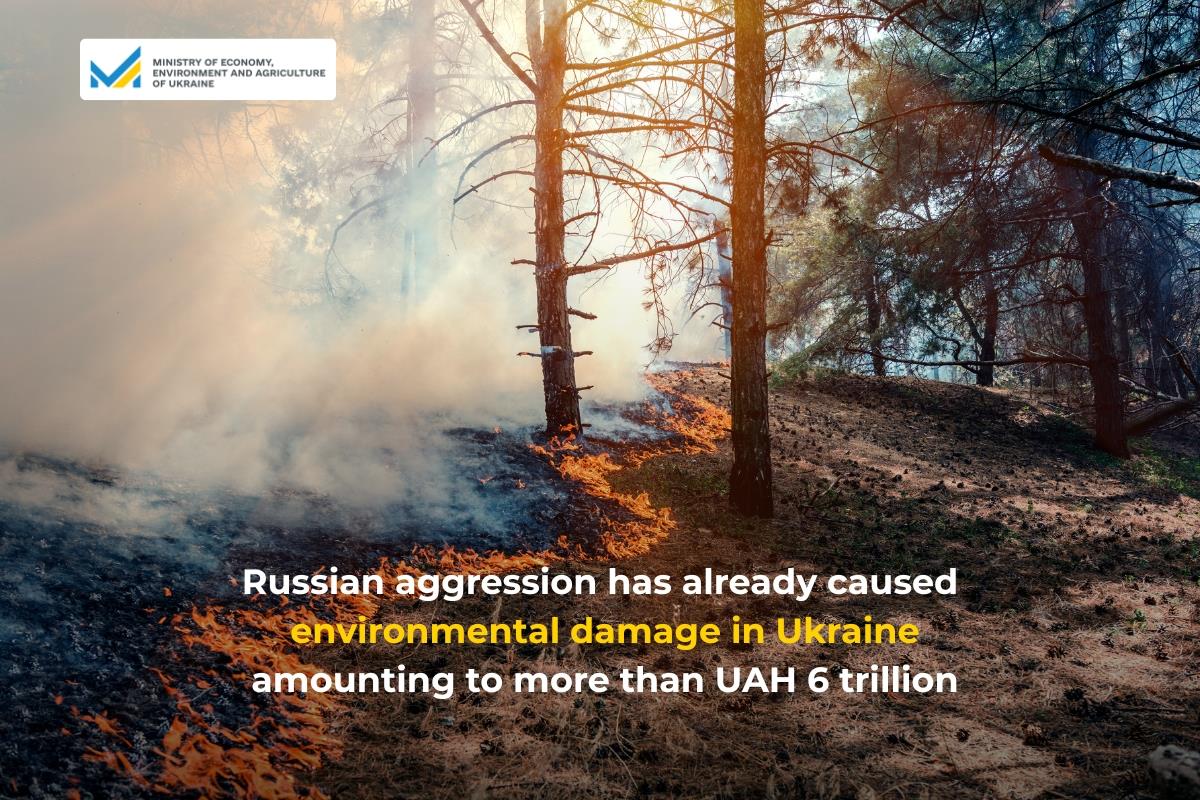
Russia’s aggression on the territory of Ukraine has led to unprecedented destruction of the natural environment, the loss of ecosystems, and large-scale pollution of air, soil and water resources. According to the State Environmental Inspectorate of Ukraine, since the beginning of the full-scale invasion, environmental losses have reached UAH 6.01 trillion – the largest environmental damage recorded in Europe in modern history.
According to the Inspectorate, the total amount of damage includes:
- UAH 1.29 trillion;
- UAH 967 billion – damage to atmospheric air;
- UAH 117.8 billion – pollution and littering of water resources;
- UAH 3.63 trillion – destruction of territories of the nature reserve fund.
Fires, explosions and toxic emissions
Some of the most devastating cases are fires at oil depots. For example, after the strike on the oil depot in the village of Kriachky, Kyiv region, toxic emissions into the atmosphere exceeded 41,000 tonnes, while soil contamination surpassed permissible levels 17-fold. Similar incidents occurred in Chernihiv, Sumy region, Rubizhne and Sievierodonetsk, where Russian missiles hit ammonia and nitric acid tanks, causing dangerous chemical releases.
Destruction of aquatic ecosystems
The destruction of hydraulic structures has long-term consequences. The 2023 blowing-up of the Kakhovka HPP dam triggered a large-scale ecological and hydrological collapse in southern Ukraine and the Black Sea region. Natural complexes were destroyed, hydrology changed, and protected areas were severely affected. A similar impact was caused by the destruction of the Oskil Reservoir dam, where 76% of its water volume was lost and the aquatic ecosystem was wiped out.
Protected territories under threat
Overall, 20% of Ukraine’s protected areas have been affected by the war, including 2.9 million hectares of the Emerald Network. Significant damage was sustained by areas such as Kinburn Spit, Oleshky Sands, Kakhovka Reservoir, Lower Dnipro, dozens of Ramsar wetlands, and other valuable ecosystems. Several national parks and reserves remain under occupation, including Askania-Nova and the Black Sea Biosphere Reserve.
Soil contamination
Ukrainian soils have also suffered extensive damage. Explosions, fires and chemical leaks alter soil structure, reduce fertility, and lead to the accumulation of heavy metals and toxic compounds. Increased concentrations of copper, lead, nickel, combustion products, sulfur and nitrogen compounds have already been recorded. This affects agricultural production, human health, and the long-term recovery of ecosystems.
The consequences of the war extend beyond Ukraine. As a result of Russian strikes, around 3 million tonnes of harmful substances were released into the atmosphere and dispersed across neighbouring European countries. Large-scale fires – at petroleum facilities, critical infrastructure and forests – generated millions more tonnes of toxic emissions.
“At the end of 2024, environmental losses from the full-scale war amounted to UAH 2.78 trillion, and today they already exceed UAH 6 trillion. Unfortunately, this figure continues to rise every day, just like the scale of destruction of Ukraine’s nature. The ecological harm caused by Russia is measured not only in trillions of hryvnias – it will take decades to restore the damaged ecosystems. And the environmental impact will extend far beyond Ukraine,” – noted Ihor Zubovych, Deputy Minister of Economy, Environment and Agriculture of Ukraine.
The Ministry of Economy, Environment and Agriculture stresses that UAH 6.01 trillion reflects only confirmed losses in territories currently under Ukraine’s control. The full extent of environmental damage will be known only after complete de-occupation and comprehensive assessment.